Deepgram adds 36 languages to Nova-3 transcription
The update covers recorded and live audio, while self-hosted customers must request updated models from their account representative.
CAT tools, translation management systems, terminology and speech technology, covering software releases, prices and daily use.
The update covers recorded and live audio, while self-hosted customers must request updated models from their account representative.
Guide
Word overlap, learned judgements and annotated errors answer different questions, so a translation score needs its method beside it.
Guide
Translation editors, project systems and software localisation tools overlap, so compare the work they handle and the data they can return.
SOV-Transcribe-1 lets teams choose verbatim or cleaned-up text, supply specialist terms and run the model on their own systems.
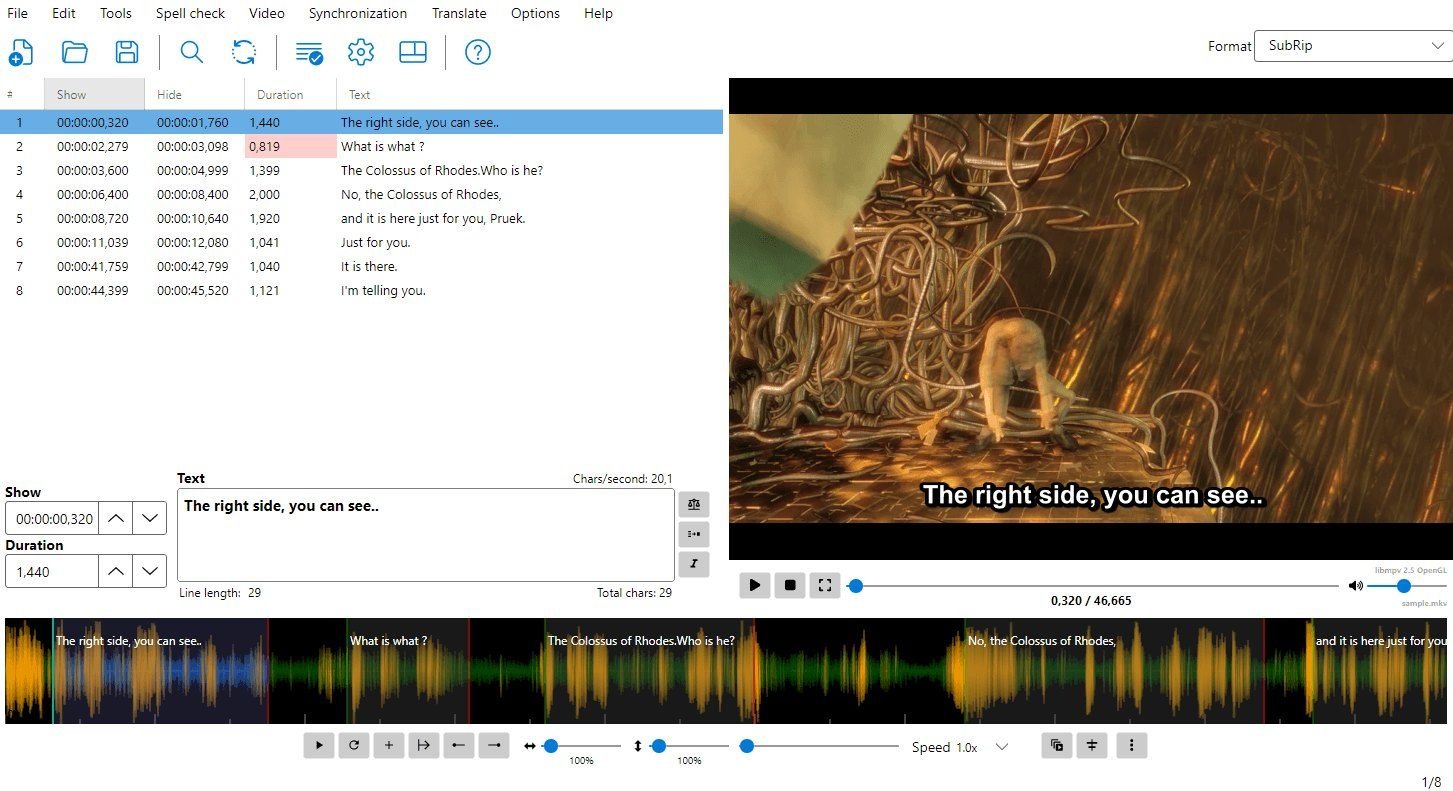
A dedicated quality-control view and bilingual export in ASSA format put review work at the centre of version 5.5.0-beta5.
Speechmatics also claims fewer errors on medical terms, but its release notes give no test details or results for individual languages.
The frames arrive on December 10th, and only adults with a Google Account from the US or South Korea can use them.
ZONOS3-Mini runs in a browser or on a laptop, clones a voice from a sample and lets users set pace and mood word by word.
The Saudi academy and ALECSO bring separate specialist dictionaries into one system, with programming interfaces to connect them to other software.
The November 25th update also swaps Claude Sonnet for the lighter Haiku and adds enterprise audit logs that record changes but not views.
Its new model promises to read prices, dates and abbreviations in context, so users need fewer custom rules to prepare text for speech.
PLaMo 3 Translate runs on the user's PC, but free commercial use requires registration and comes with a ¥1bn revenue or sales ceiling.
Weava pairs Language Weaver Pro with AI audience checks and human review, extending the company's pitch beyond the accuracy of its translations.
Numeric segments will use Smartwords and count towards confirmed work, but existing projects and copies will retain their old counting rules.
Firefox's built-in engine keeps audio on the device, but websites can still send recordings to servers if they use their own transcription services.
Azure Speech's multilingual mode adds term lists and expands to 61 language variants, but cannot be combined with stereo transcription.
DeepL API users gain separate terms for language variants as 10 formats leave beta, bringing character charges and a billing floor for some files.
Matecat 5.0 adds EPUB files and tighter approval rules, with a history showing exactly which text passed each confirmation stage.
Its beta connects compatible engines through a template, giving firms a way to use their preferred supplier with less software to maintain.
Customers can now run Melia 1's live transcription on their own servers, with automatic language detection and a new medical model.
Project creation and uploads need approval, while source-update settings decide whether changed text keeps its existing translations.
The subtitle editor pairs a revised machine translation view with audio-based timing tools and more ways to export finished work.
Version 26.5 extends project writing rules to automated revision and lets firms using their own provider keys select one engine across AI features.
Live previews can expose text that outgrows its box, but users still need to check the finished file in PowerPoint before delivery.
LILT's November update pairs wider translation coverage with previews of asset changes and new speech controls for Korean and Spanish.
Version 2026.11 brings the European Commission's engine into translation suggestions and extends reuse of matching strings across projects.
Crowdin's new skill links app screens to translation strings, though a demo still left hundreds without images and some tags needed manual work.
Custom severity weights and a 90-day preview put review thresholds in clients' hands, while the editor adds glossary-first word completion.
Its in-person feature supports 45 languages on iPhone and 15 on Android, with offline processing and transcripts users can save and export.
The service extends terminology controls to more language pairs, while a separate update lets software call its Japanese-English translation mode.
Localize.io lets agents send work to linguists as well as AI models, with approvals that reveal any later change to the reviewed wording.
The Brief is a free weekly email in English on translation, interpreting and localisation. Every story links to its sources.